

Mecharashi
HK TEN TREE LIMITED
Mecharashi caught my attention because it treats its mecha battles as more than a parade of oversized machines. The first impression is built around a serious, industrial mood, then asks me to think carefully about positioning, timing, and the condition of each machine rather than simply pushing forward. I found that combination more interesting than a strategy game that uses robots only as decoration.
This is a free strategy game from HK TEN TREE LIMITED, presented as a mecha-focused role-playing experience for players who enjoy planning battles as much as watching them unfold. Its Teen content rating fits the darker tone and combat setting. The game has reached over 500 thousand installs and holds a 4.6 average from roughly 23 thousand ratings, which suggests that its particular blend of visual style and tactical play has found a substantial audience.
My overall reaction is positive, but it is not a recommendation for everyone who likes robot games. The appeal depends on patience. The battles reward observation, and the presentation feels designed to make every encounter seem weightier than a quick arcade match. If you prefer immediate action, a lighter anime mood, or a game that lets you win mainly through rapid upgrades, this may feel slower and more demanding than expected.
A Mecha RPG That Builds Its Mood Before the Battle Begins
The opening impression is deliberate rather than explosive
What stood out to me early was the way the game establishes its identity through machinery, scale, and tension. The mechs do not feel like interchangeable costumes placed on top of a standard strategy template. Their visual presence gives the battles a sense of consequence, while the interface keeps bringing my attention back to choices: where to move, when to commit, and how much risk is acceptable.
That restraint helps the setting feel coherent. Instead of making every moment loud, the game uses a controlled presentation that lets the machines look heavy and purposeful. I like this approach because it supports the tactical layer. When the art direction suggests that these are complicated war machines, careful positioning feels more natural than reckless rushing.
Related News

Threads in Real Life: Who Should Join, Lurk, or Leave

How SHEIN Turned Shopping Into an Endless Content Feed

How to Make Fortnite Feel Smarter on Mobile

Should You Switch to Microsoft Outlook on Mobile?

Why Gallery Keeps Pulling Users Back

X Review: Why Its Network Still Matters
The game is also easier to appreciate when I approach it as a role-playing strategy title rather than a pure tactics board. The long-term appeal comes from developing a force and learning how its parts work together. A single encounter is only one piece of the experience; the more important question is whether the decisions I make across several battles create a reliable way to handle new problems.
Who will settle into the pace most comfortably
I would recommend it first to players who enjoy turn-based planning, mecha fiction, and games where a strong opening move does not automatically solve the entire encounter. It suits someone who likes studying a battlefield before acting and who can accept that progress sometimes comes from changing the plan rather than repeating the same attack.
It is less suitable for a player looking for a quick session with almost no reading or preparation. The strategic layer asks for attention, and the dramatic presentation can make the game feel more measured than a conventional mobile action title. If your ideal robot game is built around constant movement and instant reactions, another action-oriented alternative may be a better fit.
Gallery
A realistic everyday use case is a short evening session after work or school. I can play a battle, review what went wrong, and stop without feeling that I need to spend the whole night chasing a perfect run. The important habit is to treat each session as a small planning exercise: notice which approach failed, adjust the formation or timing, and return with a clearer purpose.
The visual language makes the machines readable
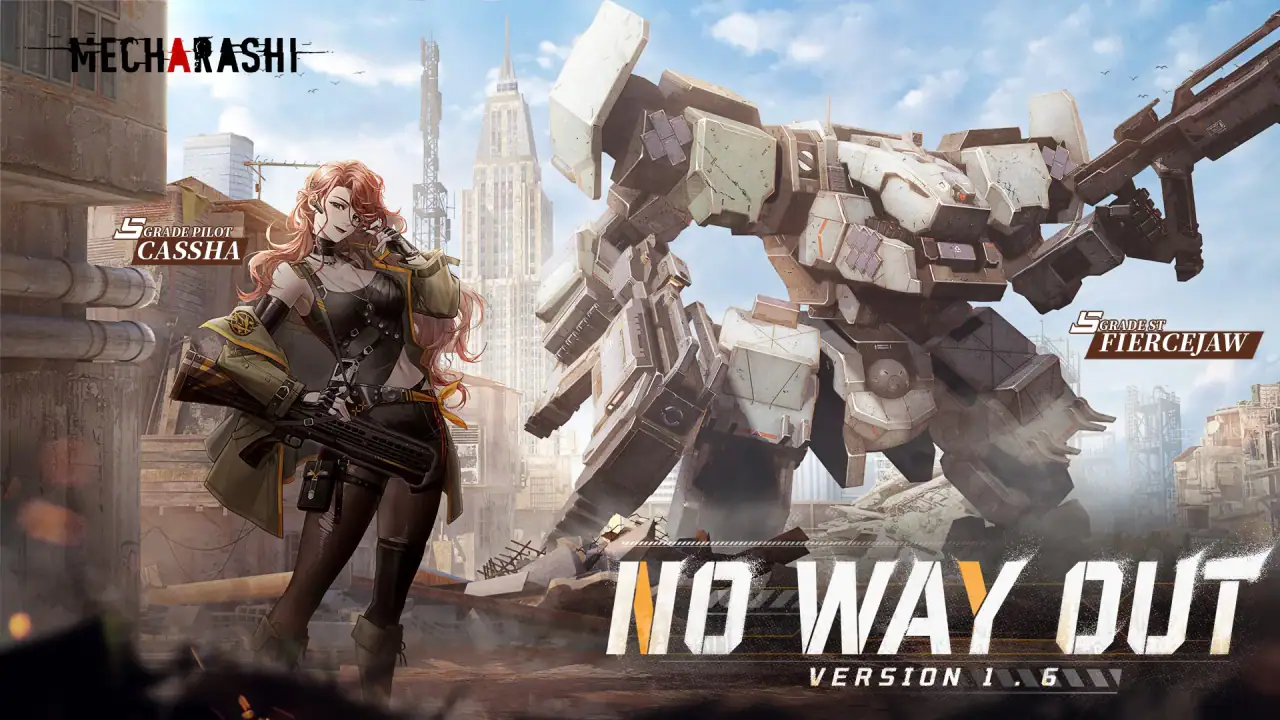
The art direction does useful work beyond making screenshots attractive. Strong silhouettes and mechanical detailing help me distinguish units and understand their role at a glance. That matters on a smaller phone screen, where excessive decoration can turn a tactical battlefield into visual clutter. Here, the industrial look gives the machines a shared identity while still allowing them to feel like meaningful pieces in a larger force.
I also appreciate the contrast between the human-scale interface and the oversized machines shown during combat. That contrast creates a useful emotional effect: I am making decisions from a controlled viewpoint, but the consequences belong to something large, expensive, and difficult to replace. It encourages me to think before committing a unit to an exposed position.
The setting benefits from not being treated as a cheerful backdrop. The visual tone points toward conflict and uncertainty, so the game’s strategic problems feel connected to its world. Even when I am focused on a practical choice, such as whether to advance or hold ground, the presentation keeps the larger mood in view.
Why the setting works best when I slow down
Mecharashi’s world is communicated through atmosphere as much as through direct explanation. The machines, environments, and interface share a serious visual vocabulary, which makes the game feel more unified than a collection of unrelated menus and combat screens. I found that the setting became clearer after spending time with the game rather than trying to understand everything immediately.
This is one of the title’s less obvious strengths: the art encourages me to read the battlefield as a place, not merely as a grid or a list of targets. Terrain, distance, and the arrangement of units matter mechanically, but they also reinforce the fiction of a force operating in a dangerous environment. That connection makes tactical decisions more satisfying because they feel grounded in the world’s physical logic.
There is a trade-off here. A highly stylized setting can make information harder to parse if visual drama takes priority over clarity. I found it helpful to pause before acting and separate decorative details from the elements that affect the decision. Players who enjoy learning a visual system gradually will likely appreciate this; players who want every rule to be obvious immediately may need more time to settle in.
Sound gives the battles a sense of weight
The sound design supports the same mood as the visuals. Rather than making every action feel like a victory lap, the audio helps maintain pressure and mechanical weight. The result is a rhythm that suits deliberate play: assess the situation, choose an action, watch the result, and reconsider the next step.
I think this matters because strategy games can become emotionally flat when their presentation treats every move as identical. Here, the combination of machine imagery and restrained pacing gives combat a more grounded character. I am not only selecting commands; I am watching a plan develop under pressure.
The rhythm is especially effective when I avoid rushing through menus. Taking a moment to inspect the situation lets the sound and animation reinforce the decision instead of becoming background noise. That may sound minor, but it changes how the game feels during difficult encounters. The presentation gives me a reason to stay engaged between major actions.
When the pacing helps and when it becomes friction
The measured rhythm is a strength during a thoughtful session, but it can become friction when I only have a few spare minutes. The experience does not always feel like a disposable time filler. I need enough concentration to understand what is happening, and the mood works best when I give it room rather than tapping through everything as quickly as possible.
For that reason, I would not choose it as my first option for a commute when interruptions are likely. A sudden pause or divided attention can break the chain of reasoning that makes a tactical battle enjoyable. It is better suited to a stable moment when I can finish a decision and reflect on its result.
The pacing also affects how the game compares with more conventional mobile strategy alternatives. Many of those titles emphasize rapid rewards, short loops, or constant notification-driven activity. Mecharashi’s appeal is different: it asks me to stay with the battle’s mood and understand the logic of the encounter. That makes it more distinctive, but it also means it may feel less immediately convenient.
The mechanics support the atmosphere when I plan around roles
The strongest mechanical fit comes from treating each machine as part of a coordinated group rather than as a solitary hero. I get more value from thinking about roles and relationships than from choosing actions in isolation. Before committing to an attack, I consider whether the move creates an opening, protects a vulnerable unit, or leaves the rest of the force in a worse position.
This is where the game’s visual language becomes practical. When the machines look specialized and substantial, it is easier to think of a battle as an operation involving different responsibilities. I recommend taking a moment at the start of an encounter to identify the safest route, the likely danger zone, and the unit that should not be exposed too early. That simple routine prevents many impulsive mistakes.
A second useful habit is to judge success by information gained, not only by damage dealt. An aggressive move may look productive while quietly damaging the structure of the whole formation. Sometimes the better action is the one that preserves options for the next turn. This is a non-obvious advantage of the slower design: it gives defensive and preparatory decisions enough room to matter.
Progression is more satisfying when it solves a problem
Because this is an RPG as well as a strategy game, progression is most rewarding when I use it to address a specific weakness. Instead of improving everything automatically, I prefer to ask what caused the last defeat. Was the force too fragile, too slow to respond, or unable to create a safe opening? Matching development choices to those questions gives progress a clearer purpose.
This approach also helps control spending pressure. Mecharashi is free to play, but in-app purchases range from $0.99 to $99.99 per item. I would advise new players to learn the battle flow before deciding whether any purchase is worthwhile. If I spend before understanding which problem I am trying to solve, I risk paying for acceleration without improving my actual decision-making.
The trade-off is that players who dislike any form of purchase option may feel uncomfortable even if they intend to remain free players. Those who are happy to treat optional spending as a convenience can approach it more calmly by setting a personal limit in advance. In my view, the game is best evaluated first on the quality of its tactical loop, not on how quickly money can shorten progression.
Three practical habits that improve the experience
- Use the first moments of a battle for reconnaissance. I look at routes, exposed spaces, and possible threats before moving the most important unit. This reduces the temptation to spend the opening turn on an impressive but poorly supported attack.
- Keep a short mental record of failed patterns. If a formation repeatedly collapses from the same direction, I change the setup rather than simply trying the encounter again. The game rewards learning the shape of a problem.
- Separate visual drama from tactical urgency. A large machine or striking animation can draw attention, but I still check whether the move improves my position. This prevents presentation from dictating the plan.
- Match sessions to your attention level. When I am tired or likely to be interrupted, I avoid starting a demanding battle. The game is more enjoyable when I can follow the sequence of decisions without rushing.
These habits are useful because they connect the game’s mood with its mechanics. The art and sound encourage me to slow down, while the tactical structure rewards exactly that behavior. The result feels intentional rather than decorative.
How it compares with familiar strategy choices
Compared with a fast auto-battle game, Mecharashi gives me more reason to remain involved. The satisfaction comes from reading the encounter and making a sequence of choices, not merely from collecting stronger units and watching the result. That makes it a better choice for someone who wants a strategy game to feel like a problem to solve.
Compared with a pure tactics game, it places more emphasis on the identity and development of its mecha force. The role-playing layer makes the machines feel like an ongoing investment rather than disposable pieces in a single puzzle. The downside is that players who want a tightly isolated tactical challenge may find the broader progression structure less direct.
It also differs from action-focused robot games because the emotional payoff is delayed. I do not get the same immediate rush from manually controlling every movement. Instead, the reward arrives when a plan survives contact with the battlefield. If that kind of delayed satisfaction sounds appealing, this is a strong candidate; if physical control is the main attraction, I would look elsewhere.
Device fit, cost, and the audience I would choose
The game supports Android devices running version 6.0 or later, which makes it accessible to a broad range of compatible phones and tablets. The current version is 1.8.2, so I would still keep the game updated through the normal store process to receive the intended current experience.
Its free entry point makes trying it straightforward, but the Teen rating and serious combat atmosphere are worth considering before handing it to a younger player. I also would not describe it as a completely casual game simply because it is on mobile. The strategic decisions, presentation, and progression choices ask for more involvement than a quick puzzle or idle title.
For me, the ideal player is someone who enjoys mecha design but also wants the machines to matter as tactical tools. A fan of turn-based planning, atmospheric science-fiction settings, and gradual mastery will probably find more here than someone who only wants spectacle. The game is at its best when I allow the visual style to draw me in and then let the mechanics earn my attention.
The atmosphere holds together because every layer points in the same direction
My final impression is that Mecharashi succeeds most clearly as a coherent mood wrapped around a demanding strategy game. The industrial art direction gives the machines identity, the setting makes the conflict feel serious, and the sound and pacing support careful decision-making. None of those elements replaces good mechanics, but together they make the mechanics feel more meaningful.
The main limitation is also part of its identity. The deliberate rhythm can feel slow, the visual language may require patience, and the progression structure is not aimed at players who want instant mastery. Optional purchases add another consideration, especially for anyone who prefers a completely pressure-free mobile experience. I would skip it if I wanted fast reflex gameplay, minimal reading, or a session that requires almost no concentration.
For the right player, however, the game offers a satisfying loop: observe the battlefield, make a measured commitment, learn from the result, and refine the force for the next challenge. That loop is why I would recommend Mecharashi to a friend who likes strategy with a strong sense of place. It is not merely a game about mechs; it is a game that uses mecha scale, sound, and pacing to make planning feel consequential.
In the end, I see it as a thoughtful choice for players who want their mobile strategy games to carry an atmosphere. Its free price makes experimentation easy, while its Teen rating, mature tone, and optional purchases mean it deserves a considered decision rather than an automatic download. If you are willing to slow down and let the battlefield teach you, Mecharashi has a distinctive personality and a tactical rhythm that can stay with you beyond a single match.
FAQs for Mecharashi
What is Mecharashi?
Mecharashi is a tactical role-playing game centered on turn-based mech battles. You assemble and customize a squad of pilots and machines, then fight across grid-based maps where positioning, weapon range, terrain, and enemy weaknesses matter. Alongside combat, the game typically includes story progression, character development, equipment management, and collectible mechs, making it suitable for players who enjoy strategy as much as action.
How does combat work in Mecharashi?
Battles in Mecharashi use turn-based tactical gameplay rather than real-time controls. You choose where each unit moves, which weapon to use, and when to defend, attack, or activate special abilities. Mechs may have different strengths, armor types, and equipment, so simply moving forward is rarely the best approach. Careful positioning and planning several turns ahead are important, especially during difficult missions.
Can I customize and upgrade my mechs?
Yes, mech customization is an important part of Mecharashi. Depending on the unit and available resources, you can improve equipment, weapons, armor, abilities, and other combat attributes. Upgrading the wrong parts can limit your effectiveness, so it is worth considering each mech’s role before spending materials. Experimenting with different builds can help you create balanced teams for varied mission objectives and enemy formations.
Is Mecharashi free to download and does it include in-app purchases?
Mecharashi can generally be downloaded without an upfront purchase, but the game may include optional in-app purchases. These can be connected to resources, character or mech acquisition, progression materials, cosmetic items, or limited-time offers, depending on the version and region. You can usually play without paying, although progress and collection may feel faster for users who choose to spend money.
Does Mecharashi require an internet connection?
An internet connection may be required for the initial download, account setup, updates, event content, cloud-related features, and synchronization with the game’s servers. Some story or battle sections might be accessible during short periods without a connection, but you should not assume that the complete game works offline. A stable connection is recommended to avoid interruptions, lost progress, or problems claiming rewards.
Pros
- Deep tactical combat rewards careful positioning and planning.
- Distinct mech customization lets you tailor units to different roles.
- Engaging story combines political conflict with character-driven moments.
- Turn-based battles are accessible while offering considerable strategic depth.
- Regular events and missions provide additional content beyond the campaign.
Cons
- Some battles can feel lengthy
- especially when replaying difficult stages.
- Progression may require frequent grinding to upgrade mechs and characters.
- The large roster and systems can feel overwhelming for new players.
- Gacha-style mechanics may limit access to certain powerful characters or gear.
- Storage use and battery drain can be noticeable during extended sessions.


